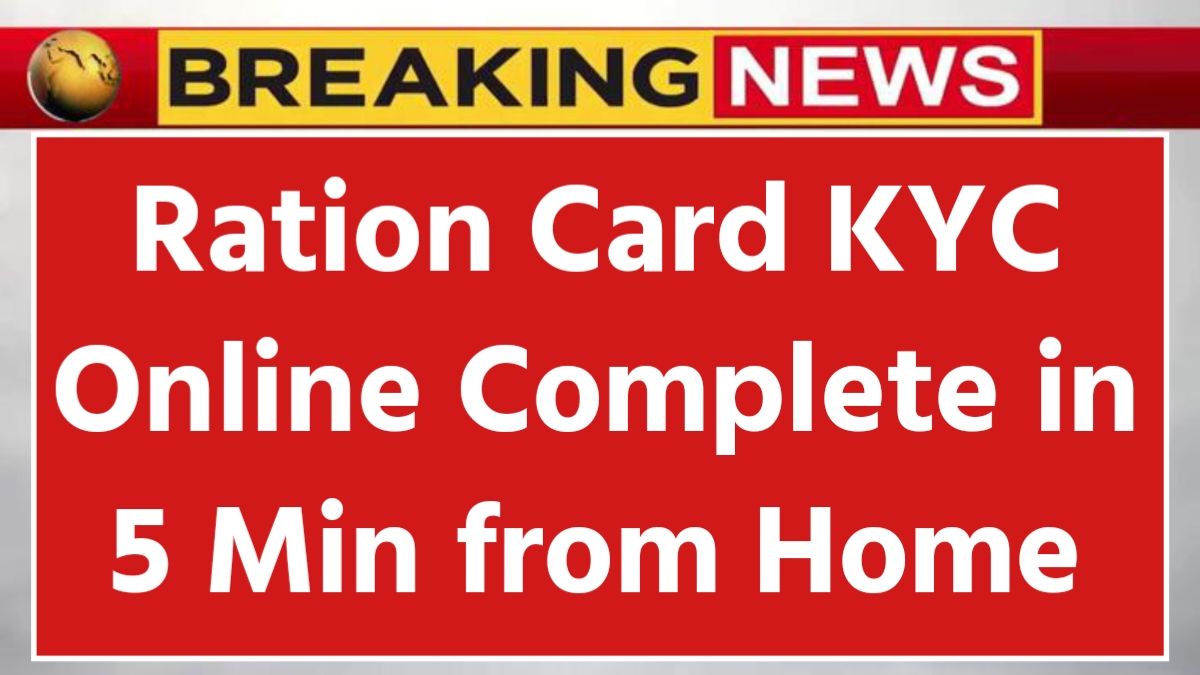
Ration Card KYC Update:In 2026, the Indian government has made it possible for ration card holders to complete their KYC (Know Your Customer) update entirely online. This change aims to make the process faster, simpler, and more convenient, replacing the older system that required long queues, repeated paperwork, and visits to fair price shops. The online KYC update is part of a larger effort to ensure that food subsidies reach the right beneficiaries while reducing errors, duplication, and leakages in the Public Distribution System (PDS).
Why the 2026 KYC Update Is Important
Over the years, migration, deaths, and changes in family structures have made state-level ration card databases outdated. Many ineligible or duplicate entries led to subsidy leakages, while genuine beneficiaries sometimes missed out on their entitled benefits. The 2026 KYC update addresses these issues by relying on Aadhaar-based authentication to verify identities and update records. Officials believe that regular digital verification will improve transparency and reduce the number of “ghost” ration cards, ensuring that government support reaches those who genuinely need it.
Who Needs to Update Their Ration Card KYC
Nearly all ration card holders, including those under Priority Household (PHH), Antyodaya Anna Yojana (AAY), and state-specific schemes, are required to complete the KYC update. This makes it one of the largest administrative exercises in recent years. Families dependent on subsidised grains must comply promptly, as delays in verification could temporarily suspend their benefits. Migrant workers, elderly individuals, and residents in rural areas are particularly affected, as KYC mismatches can disrupt their access to essential food supplies.

How the Process Has Changed
The most significant change in 2026 is the shift from offline to online verification. Earlier KYC drives involved biometric authentication at ration shops or government offices, often causing delays and long waiting periods. Now, beneficiaries can update their ration card details through official state PDS portals or mobile applications. The system guides users step by step, making it accessible even for those with basic digital literacy. For individuals unable to complete the process online, local PDS offices continue to provide offline support.
Benefits of Digital KYC Verification
The online KYC process offers several practical advantages. It saves time and travel costs for beneficiaries, reduces administrative burden on government offices, and speeds up verification. For senior citizens or people living in remote areas, digital KYC allows them to complete the update from home in just a few minutes. At the same time, government authorities can maintain more accurate records, improving subsidy distribution and preventing errors that previously caused exclusion or duplication.
Economic and Social Impact
Accurate ration card data has both economic and social benefits. By removing duplicate or outdated entries, the government can save significant funds in food subsidies. These savings may be redirected toward improving grain quality, storage infrastructure, and expanding welfare coverage for genuine beneficiaries. Socially, consistent and accurate delivery of subsidised food strengthens trust in the PDS system. Beneficiaries who receive uninterrupted support are more confident in the government’s programs, while grievance mechanisms ensure that errors can be corrected promptly.

Lessons and the Way Forward
India’s experience with Aadhaar-linked welfare schemes shows that digital reforms can reduce duplication but must be designed carefully to avoid excluding genuine beneficiaries. The 2026 KYC update incorporates these lessons by offering multiple verification modes, longer update windows, and offline support options. In the future, continuous database syncing with birth, death, and migration records may replace large-scale drives, making updates less disruptive and more efficient.
Public Response and Accessibility
Initial feedback on the Ration Card KYC Update 2026 has been positive among tech-savvy users, many of whom report completing verification within minutes. However, digital literacy and internet access remain challenges in rural and remote areas. Government support through local PDS offices and helplines is crucial to ensure that no eligible household misses out on benefits.
The 2026 ration card KYC update represents a major step in modernising India’s food security system. By moving verification online, the government aims to make the process faster, more accurate, and more convenient for beneficiaries. Successful implementation will reduce subsidy leakages, improve transparency, and ensure that essential food support reaches those who need it most, making the Public Distribution System more effective and trustworthy.

Disclaimer
This article is for informational purposes only. Ration Card KYC rules, verification procedures, and timelines are subject to official government notifications. Beneficiaries should rely on the official state PDS portals or authorised government sources for accurate and updated information.