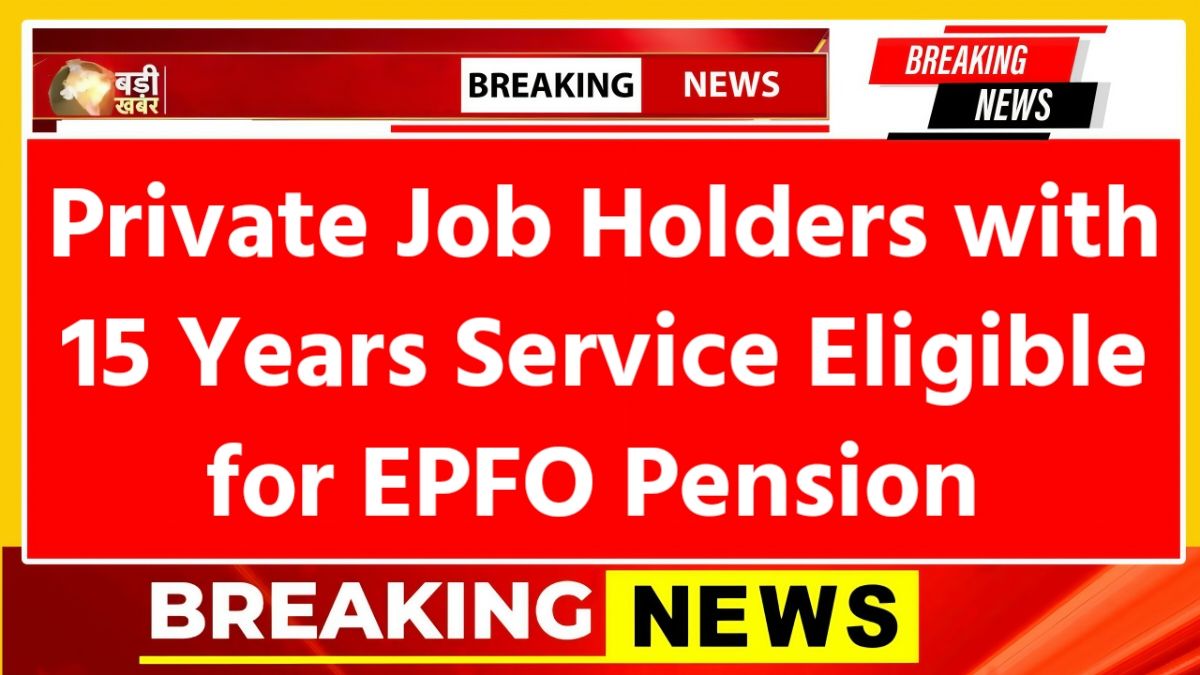
2026 EPFO Pension Rules Explained:The year 2026 has brought important clarity for private sector employees in India regarding retirement security. The updated EPFO pension rules under the Employees’ Pension Scheme (EPS) aim to provide stable and predictable pension benefits, especially for workers who have completed at least 15 years of service. For a long time, private job holders faced uncertainty about post-retirement income, but these reforms are designed to strengthen financial confidence and long-term planning.
How the EPFO Pension System Works
The EPFO pension system operates automatically for employees covered under EPF. A portion of the employer’s contribution to the Provident Fund is diverted to the Employees’ Pension Scheme. Employees do not need to make any extra contribution for pension benefits. Over time, these regular contributions help build pension eligibility, ensuring a steady monthly income after retirement.
One major advantage of this system is that it works silently in the background. Employees continue to build pension benefits while focusing on their careers, without additional paperwork or separate investments. This makes EPS a dependable foundation for retirement planning.
यह भी पढ़े:
 Income Tax Framework Reset for 2026: What’s Changed for Salaries, ITR Filing and Smarter Tax Saving
Importance of Completing 15 Years of Service
Completing 15 years of pensionable service is a key milestone under the 2026 EPFO pension rules. Employees who reach or exceed this period become eligible for higher and more stable pension benefits. This rule rewards consistency and long-term participation in formal employment.
Employees with less than 15 years of service are still eligible for pension benefits, but the monthly amount is comparatively lower. The focus on long service reflects the government’s intent to promote job continuity and disciplined retirement savings, especially in the private sector.
Pension Calculation Explained in Simple Terms
EPFO pension calculation is based mainly on two factors: pensionable salary and pensionable service. Pensionable salary is usually calculated as the average salary earned during the final years before retirement. Pensionable service refers to the total number of years for which contributions were made.
यह भी पढ़े:
 Bank Working Hours Set for Revision: Customers to See Changes in Branch Timings After RBI Review
Employees with longer service records naturally receive higher pension amounts. Those who retire early can still claim pension, but the amount is reduced to account for a longer payout period. On the other hand, employees who continue working beyond the normal retirement age receive increased benefits, encouraging extended participation in the workforce.
Job Changes and Pension Continuity
Private sector employees often change jobs, and the EPFO system supports this reality. Through the Universal Account Number (UAN), all EPF and EPS contributions remain linked, regardless of employer changes. This ensures that service years are not lost and pension eligibility continues without interruption.
As long as employees transfer their EPF accounts instead of withdrawing funds, their pensionable service remains intact. This feature is especially beneficial for professionals who move frequently but want long-term retirement security.
यह भी पढ़े:
 LIC Introduces High-Interest FD Scheme for Secure Investing in 2026 :LIC High Interest FD Scheme
Digital Access and Transparency
One of the most important improvements in recent years is the digital management of EPFO accounts. Employees can now check their contributions, service history, and pension eligibility online. This transparency reduces errors and helps workers understand their future pension well before retirement.
Digital access also makes the claim process faster and simpler for retirees. Senior citizens no longer need to rely heavily on physical paperwork or repeated office visits, making the system more user-friendly and efficient.
Family Pension and Social Security Protection
EPFO pension benefits extend beyond the employee. In the event of a pensioner’s death, eligible family members can receive a family pension. This ensures financial support for dependents and reinforces EPFO’s role as a social security system rather than just an individual retirement benefit.
This protection gives employees peace of mind, knowing that their long-term contributions will continue to support their family even in difficult circumstances.
Long-Term Impact of the 2026 EPFO Pension Rules
The 2026 EPFO pension rules mark a significant step toward improving retirement security for private sector workers. With clear eligibility criteria, digital transparency, and family protection, the system encourages employees to view EPFO as a core part of retirement planning.
These reforms are expected to improve financial discipline, reduce premature withdrawals, and promote long-term employment stability. Over time, this could narrow the retirement security gap between private and government sector employees.
Disclaimer
This article is for informational purposes only. EPFO pension rules and benefits are subject to change based on government notifications. Readers are advised to verify details from official EPFO sources or consult a qualified financial advisor before making retirement-related decisions.